

Content
Executive Summary
Construction material costs rose this quarter, the fourth consecutive increase, totaling 3.39% over the past year. Prices remain near record highs, sitting just 1.34% below the 2022 peak following the pandemic-era surge of more than 53%.
Decarbonization & policy shifts: New York’s Climate Leadership and Community Protection Act (CLCPA) continues to reshape the construction landscape. The legislation is driving widespread electrification and low-carbon adoption, with all-new buildings required to be all-electric by 2029. Starting in 2030, fossil fuel systems in existing buildings will begin a phased retirement. New “Buy Clean” mandates and energy code updates are accelerating demand for sustainable materials and retrofit projects, positioning low-carbon expertise as a key differentiator for forward-looking builders.
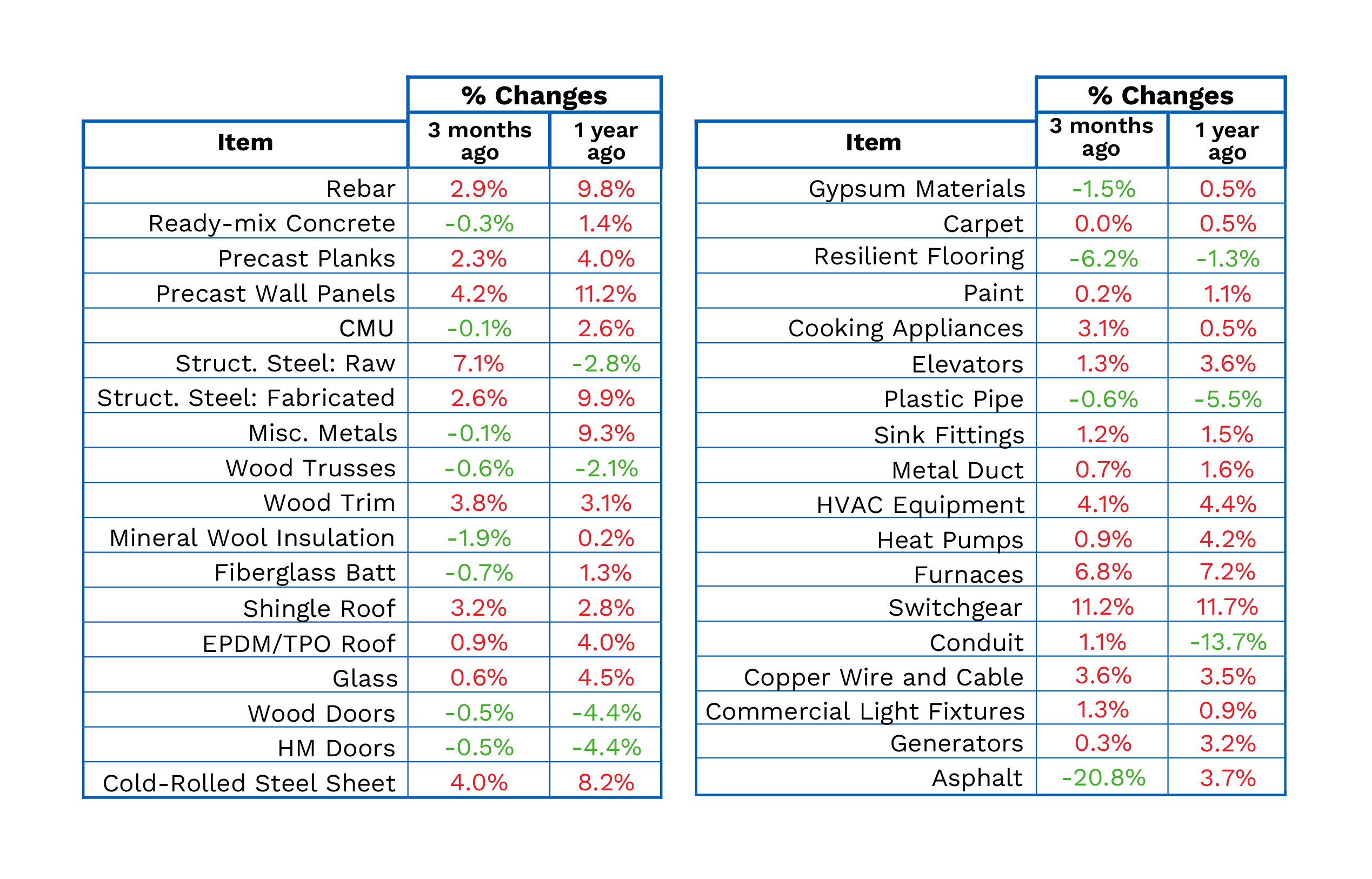
Material cost trends: Significant cost increases were recorded in switchgear (+11.2%), steel (+7.1%), and furnaces (+6.8%), reflecting strong infrastructure and electrification demand. In contrast, asphalt (–20.8%), flooring (–6.2%), and lumber (–11% YTD) declined, providing some relief for wood-based and interior finish scopes.
Labor and supply chain pressures: Construction wages have climbed 2.5% year-to-date, driven by ongoing skilled labor shortages. The electrical equipment sector remains the primary constraint — transformer lead times now exceed 12 months — as grid modernization and electrification initiatives continue to stretch supplier capacity.
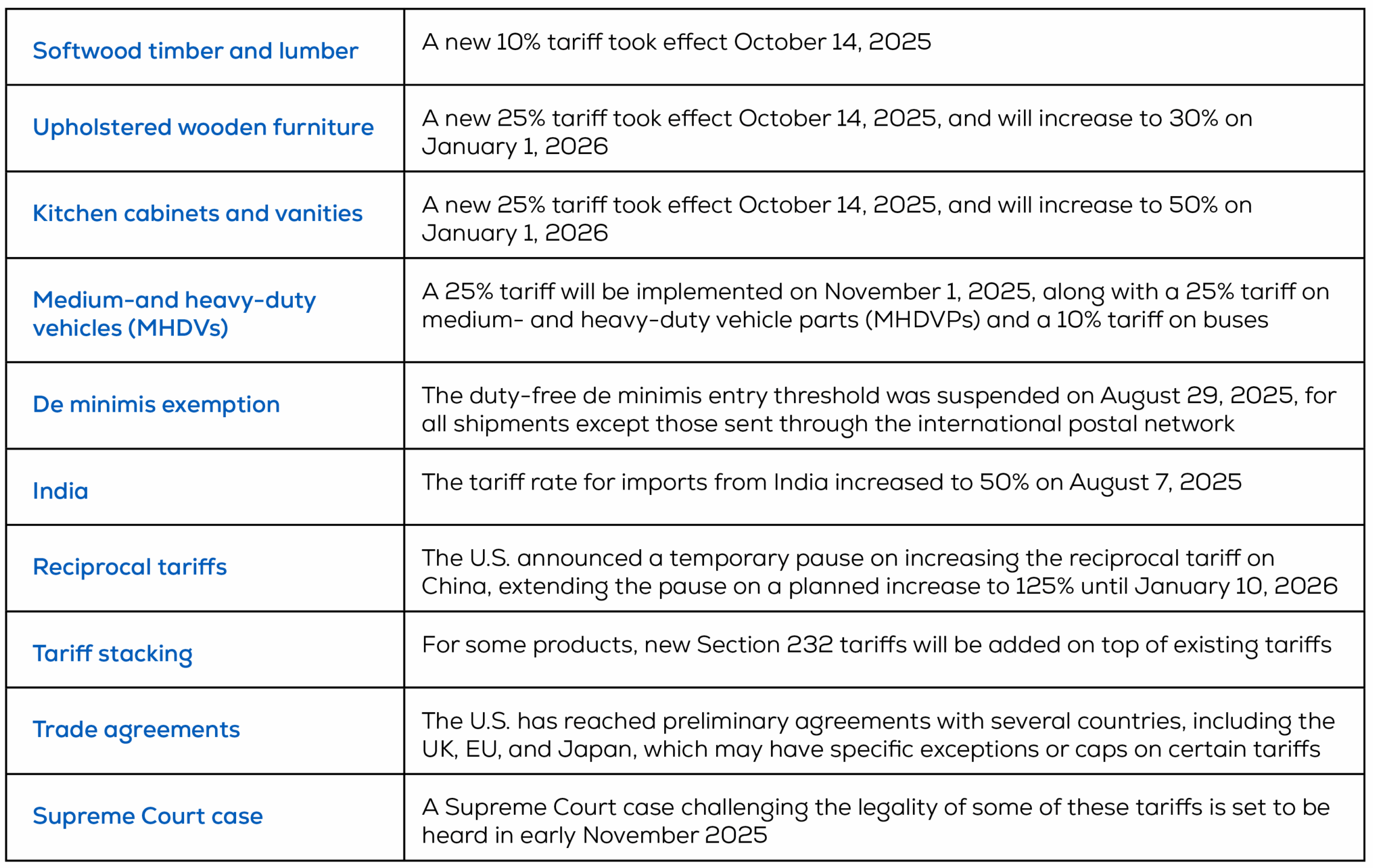
Trade and tariff developments: New and higher tariffs on lumber, cabinetry, furniture, and vehicle components are introducing additional volatility. The suspension of certain duty-free import programs, combined with pending Supreme Court rulings on trade policy (expected late 2025), adds further uncertainty to procurement planning.
Outlook: The construction industry faces a period of sustained cost pressure, extended equipment lead times, and rapid policy-driven change. Success will increasingly depend on early supply coordination, strategic sourcing, and proactive adaptation to decarbonization mandates.
Special Topic
The Effects of Decarbonization on the Construction Industry
Decarbonization is the process of reducing or eliminating carbon dioxide and other greenhouse gas emissions from human activities, primarily by switching from fossil fuels to low-carbon and renewable energy sources. It involves a broad shift across all sectors—like energy generation, transportation, and industry—to decrease the carbon footprint of products, services, and economies. Key strategies include improving efficiency, switching to renewable power (solar, wind), electrifying systems (vehicles, buildings), using clean fuels, and capturing and storing carbon.
The New York State Climate Leadership and Community Protection Act (CLCPA), also known as The Climate Act, is among the most ambitious climate laws in the nation. Codified in 2023, it is the primary engine of New York's decarbonization efforts and is fundamentally reshaping the construction industry. Through a series of mandates and incentives outlined in its Scoping Plan, the act is driving a comprehensive shift away from fossil fuels in both new and existing buildings, altering construction practices, creating new job opportunities, and promoting sustainable materials. These mandates include:
- Emissions Reduction: New York to reduce economy-wide greenhouse gas emissions 40 percent by 2030 and no less than 85 percent by 2050 from 1990 levels.
- Renewable Generation: New York to deliver 70% of its electric grid generation from renewable energy sources by 2030, with a longer-term goal to reach zero-emissions electricity by 2040.
Although certain aspects and milestones of The Climate Act are currently being challenged legally, the message is clear: Decarbonization in New York, and most other states is moving forward.
Effects on new construction
The All-Electric Buildings Act, enacted under the CLCPA, is the most direct policy impacting new projects.
- Forbids fossil fuel systems: Starting in 2026, most new residential and commercial buildings under seven stories must be all-electric, with this prohibition extending to all new construction by 2029. Exemptions exist for certain essential facilities like hospitals and restaurants.
- Promotes new technology: This requires builders to adopt high-efficiency electric heating and cooling systems, such as air-source and ground-source heat pumps, along with electric appliances.
- Changes utility planning: As electricity demand increases, particularly during peak heating and cooling seasons, utilities are now collaborating with regulators and developers to invest in grid upgrades to ensure a reliable supply and provide the level of service that will be required. Many utilities are already at, or near capacity and are requesting rate increases to help fund this growth.
Pike’s history with Net-Zero Building and Passive House construction provides valuable experience in preconstruction, planning, and construction of these types of structures.
Effects on existing buildings
- The majority of New York's building stock is older and relies on fossil fuels, so the CLCPA also mandates a massive retrofitting campaign.
- System replacement mandates: The act's Scoping Plan requires that homeowners and building owners replace their fossil fuel systems with electric or geothermal units at the end of their useful life. This starts with heating and cooling systems and water heaters in 2030, followed by other appliances in 2035.
- Energy code improvements: The state is setting stronger energy codes for existing buildings, with NYC's Local Law 97 serving as a leading example by placing carbon caps on large buildings. This drives a significant market for energy-efficiency upgrades like better insulation and air-sealing.
- Effects on building materials: The CLCPA targets not just the energy used by buildings, but also the "embodied carbon"—the emissions from manufacturing and transport of materials.
- "Buy Clean" requirements: New York was the first state to develop Buy Clean Concrete guidelines for public projects, requiring the use of low-embodied-carbon concrete and the submission of Environmental Product Declarations (EPDs).
- Market transformation: These policies drive demand for innovative, low-carbon materials like mass timber and incentivize the development of sustainable building products.
Initial costs for these types of materials may come at a premium until they become more mainstream, contributing to higher initial costs of construction.
Impacts on the workforce and costs
- The changes driven by the CLCPA have significant implications for the construction workforce and the economic landscape of the industry.
- Job creation and training: The transition is expected to create thousands of jobs, particularly in installation and repair roles related to building decarbonization. The state must invest heavily in training the workforce with new skills, as emphasized in the Scoping Plan's "Just Transition" framework.
- Financial incentives: To help manage costs, the state offers various incentives for energy efficiency upgrades and electrification. Additionally, a new Climate Change Superfund Act will collect funds from major polluters to pay for climate adaptation projects.
- Upfront vs. long-term costs: While some projects may see higher initial costs, all-electric and highly efficient buildings often result in long-term energy savings for owners and residents.
Material Costs
INPUTS TO CONSTRUCTION
Similar increase in material inputs to construction over the most recent quarter. Up 0.57%, increasing for the fourth consecutive quarter. Cumulative change over the last 12 months is 3.39%

Specific Materials
Significant Increases
Switchgear
Up 11.2%
Structural Steel
Up 7.1%
Furnaces
Up 6.8%
Precast Wall Panels
Up 4.2%
Significant Decreases
Mineral Wool Insulation
Down 1.9%
Asphalt
Down 20.8%
Resilient Flooring
Down 6.2%
Lumber
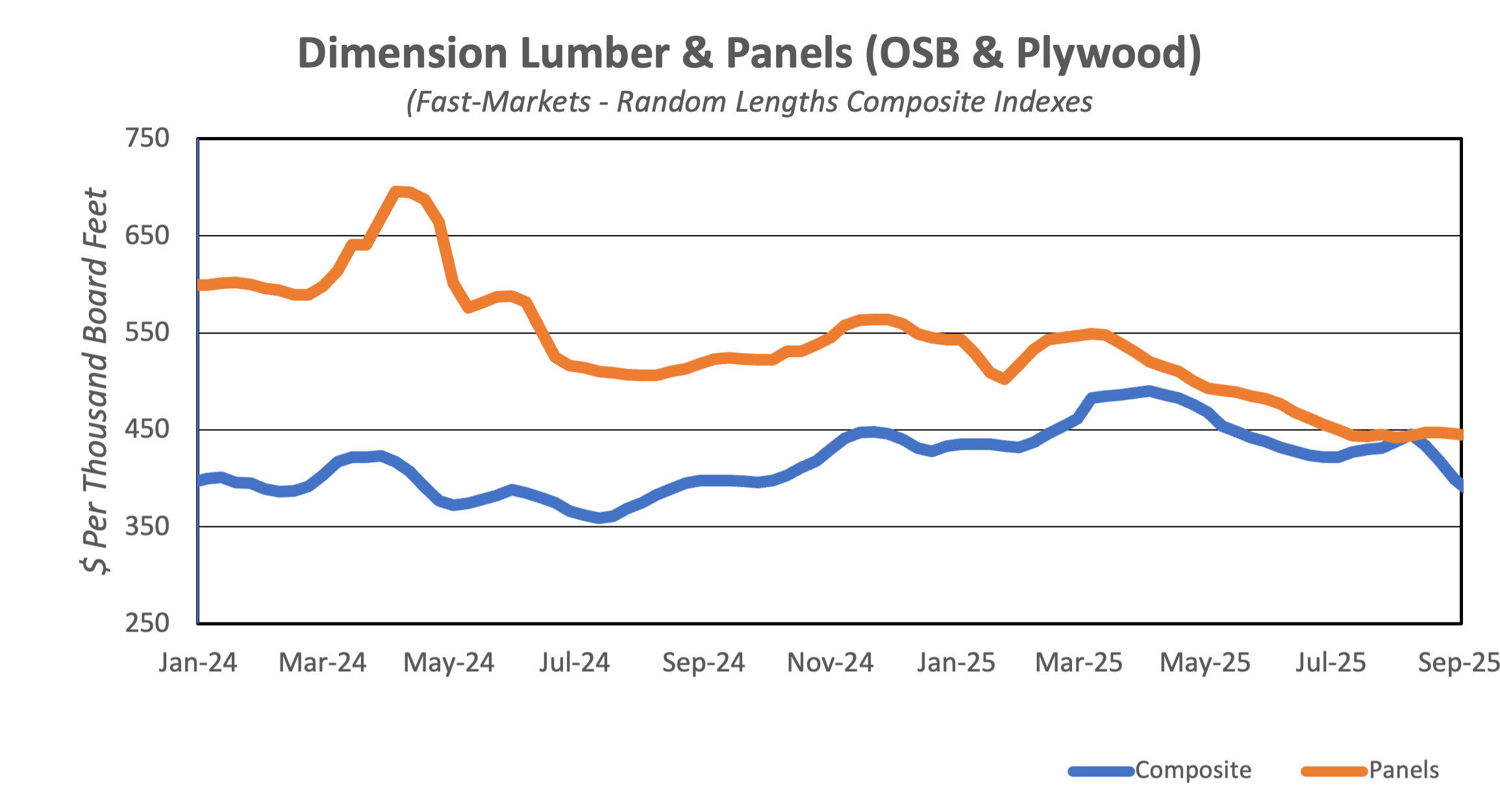
The chart shows lumber prices at the mill. These directly and significantly affect the cost of wood-framed apartments, retirement communities, and many affordable housing projects.Composite (a mixture of dimension lumber products) pricing has decreased 11.0% year-to-date, and 2.8% over the last year. Panels (a mixture of plywood and OSB) are down 18.2% year-to-date, while decreasing 15.1% since this time last year.
Tariff Snapshot
Tariffs and trade agreements continue to have a significant effect nationwide on pricing and sourcing of construction materials. Their uncertainty and fluid nature stems from frequent announcements of new tariffs, changes in existing ones, and uncertainty about their future application, making it difficult for businesses to plan ahead. The following data is current as of this writing but, of course, subject to change.

To discuss your project needs and how
Pike can assist, please contact:
ED KUROWSKI
Executive Vice President
Contact: kuroe@pikecs.com / 585.764.3241
REFERENCES
Bureau of Labor Statistics