

Content
Executive Summary
Outlook
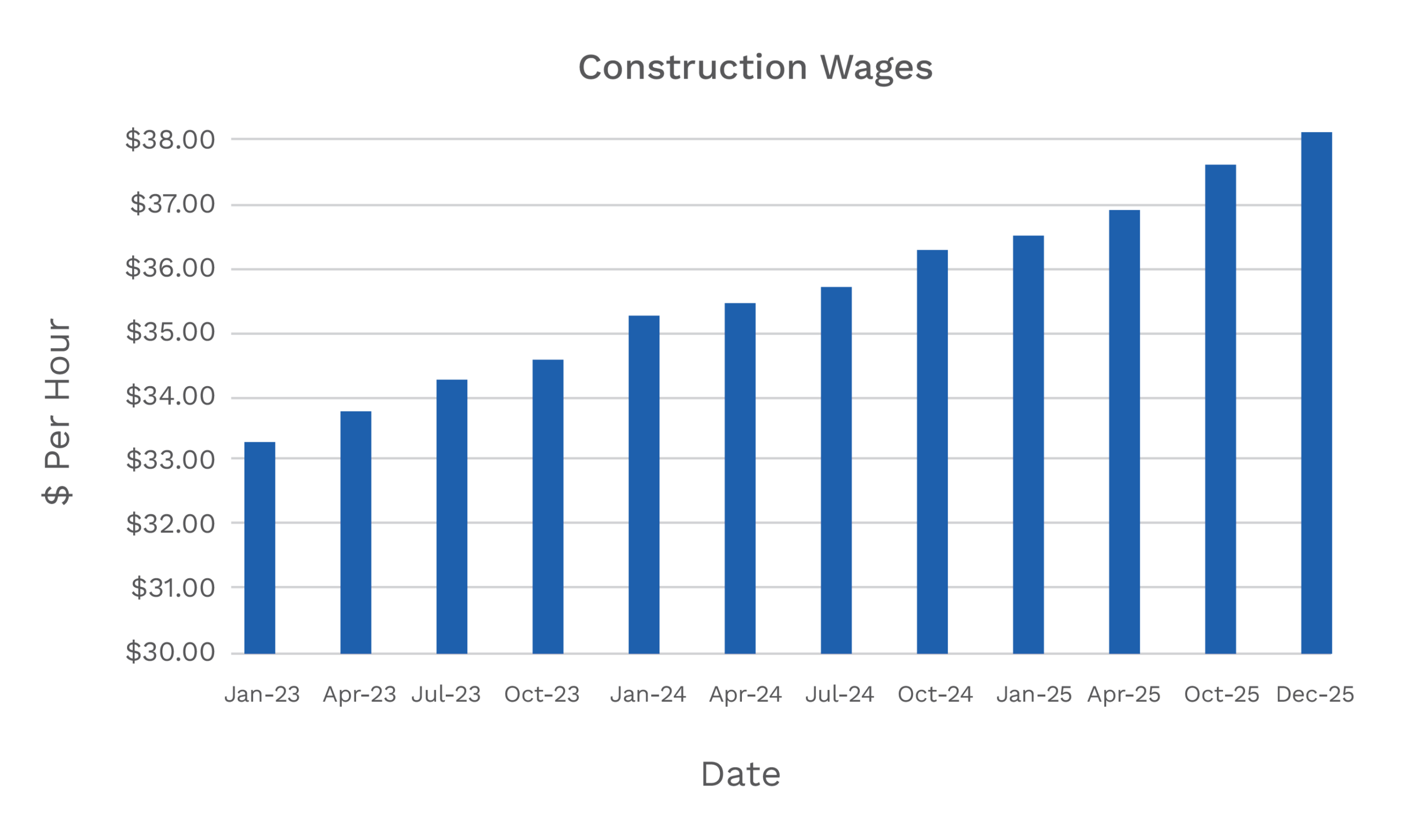
The industry is projected to require approximately 499,000 additional workers in 2026 to meet demand and replace retirees. Labor availability remains tight despite slower hiring, and construction wages increased 4.16% in 2025, adding ongoing pressure to project costs.
Sector Demand Concentration
Growth is concentrated in mission-critical segments such as data centers, power and grid infrastructure, and select public infrastructure projects. These sectors are intensifying competition for skilled trades and digitally capable construction professionals.
Material Costs
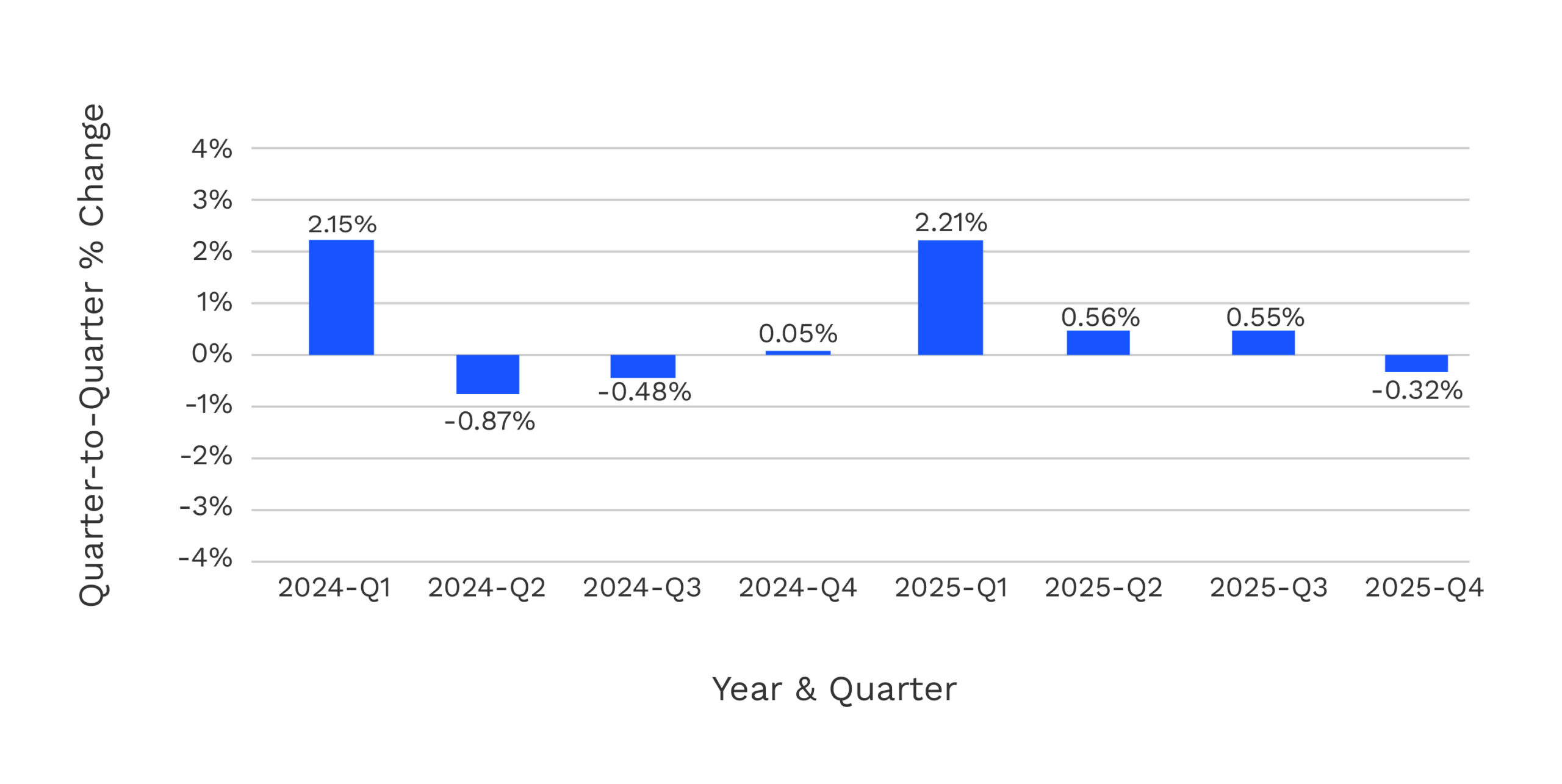
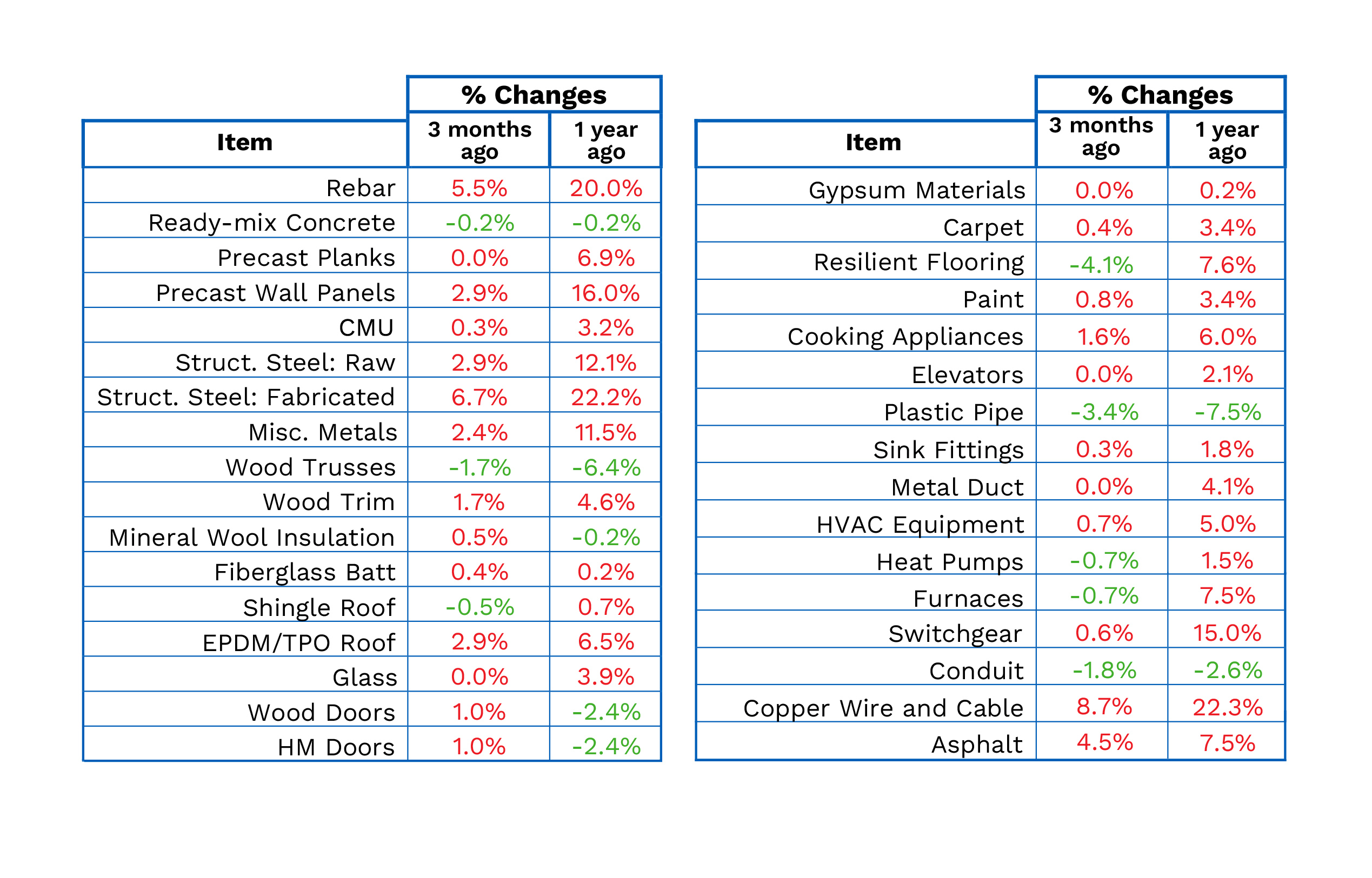
Inputs to construction declined 0.32% in the most recent quarter but remain up 3.0% year-over-year. Key materials—including copper wire and cable (+22.3% annually), fabricated structural steel (+22.2%), and rebar (+20.0%)—continue to show elevated pricing, while lumber pricing remains mixed.
Overall, firms must prioritize workforce strategy, technology adoption, and disciplined cost management to manage risk and remain competitive in a constrained environment.
Special Topic
National Workforce Outlook
Construction employment growth moderated sharply in 2025, reflecting higher interest rates, project deferrals, and cautious hiring behavior. However, this slowdown has not eased labor constraints. The industry continues to operate in a “low-hire, low-fire” environment, where firms are reluctant to add headcount but equally unwilling to release skilled workers.
Looking ahead to 2026, the construction industry is projected to require approximately 499,000 additional workers to meet expected demand and replace retiring workers. Nearly 41% of today’s workforce is expected to retire by 2031, while only about 10% of workers are under the age of 25, creating a widening generational gap that will be difficult to close.
Persistent labor shortages pose material productivity risks. Unfilled positions contribute to schedule delays, higher overtime usage, and increased safety exposure. If unresolved, labor constraints could result in more than $100 billion in lost construction output by the end of 2026, reinforcing upward pressure on project costs.
Sector Concentration and Skill Demand
Growth in 2026 is expected to remain highly concentrated rather than broad-based. While several private nonresidential categories continue to soften, demand remains strong in select mission-critical segments:
- Data Centers and Digital Infrastructure: Continued expansion driven by AI adoption and hyperscale computing.
- Power and Grid Infrastructure: Ongoing investment supporting energy reliability and capacity expansion.
- Public Infrastructure: Steady but uneven growth tied to government funding cycles.
These segments are intensifying competition for specialized labor, particularly electricians, MEP coordinators, equipment operators, and concrete workers. Demand is also increasing for “hybrid” professionals who combine field experience with digital skills in BIM, VDC, and AI-enabled project controls.
Compensation and Cost Pressures
Labor costs remain a central concern entering 2026. Construction wages increased approximately 4–5% year-over-year, continuing to outpace the broader private sector. Pay premiums of 25–30% are increasingly common for workers with specialized technical or digital expertise.
Emerging Workforce Risks
Several external factors are compounding labor challenges:
- Immigration Sensitivity: More than one-third of construction trade workers nationwide are foreign-born, making workforce availability highly sensitive to immigration enforcement actions.
- Experience and Safety Gaps: Increased reliance on less-experienced workers has heightened safety and productivity risks.
- Technology Skill Mismatch: Adoption of automation, robotics, and AI tools is accelerating, but firms face a growing shortage of workers capable of operating and managing these technologies.
Regional Considerations
Labor constraints are affecting construction markets nationwide, regardless of regional demand drivers. Markets experiencing population growth, infrastructure investment, or concentrated development in data centers and energy are facing particularly acute workforce pressure. Across regions, shortages of experienced supervisors, project managers, electricians, and equipment operators are emerging as a primary constraint on execution capacity.
Regulatory complexity, climate-related compliance requirements, and sensitivity to immigration policy vary by location, but collectively contribute to workforce volatility and scheduling risk. Firms operating across multiple markets are increasingly standardizing workforce strategies and technology platforms to mitigate these regional differences and improve labor flexibility.
Strategic Responses for 2026
To address sustained labor constraints, contractors are implementing structural changes across operations and talent management:
- Reducing On-Site Labor Needs: Expanded use of modular construction, prefabrication, and automation.
- AI-Enabled Workforce Management: Predictive labor forecasting, smart scheduling, and AI-assisted recruiting.
- Talent Pipeline Investment: Stronger partnerships with CTE programs, expanded apprenticeships, and cross-training initiatives.
- Modernized Work Models: Flexible schedules, diversity-focused recruitment, and technology-forward work environments.
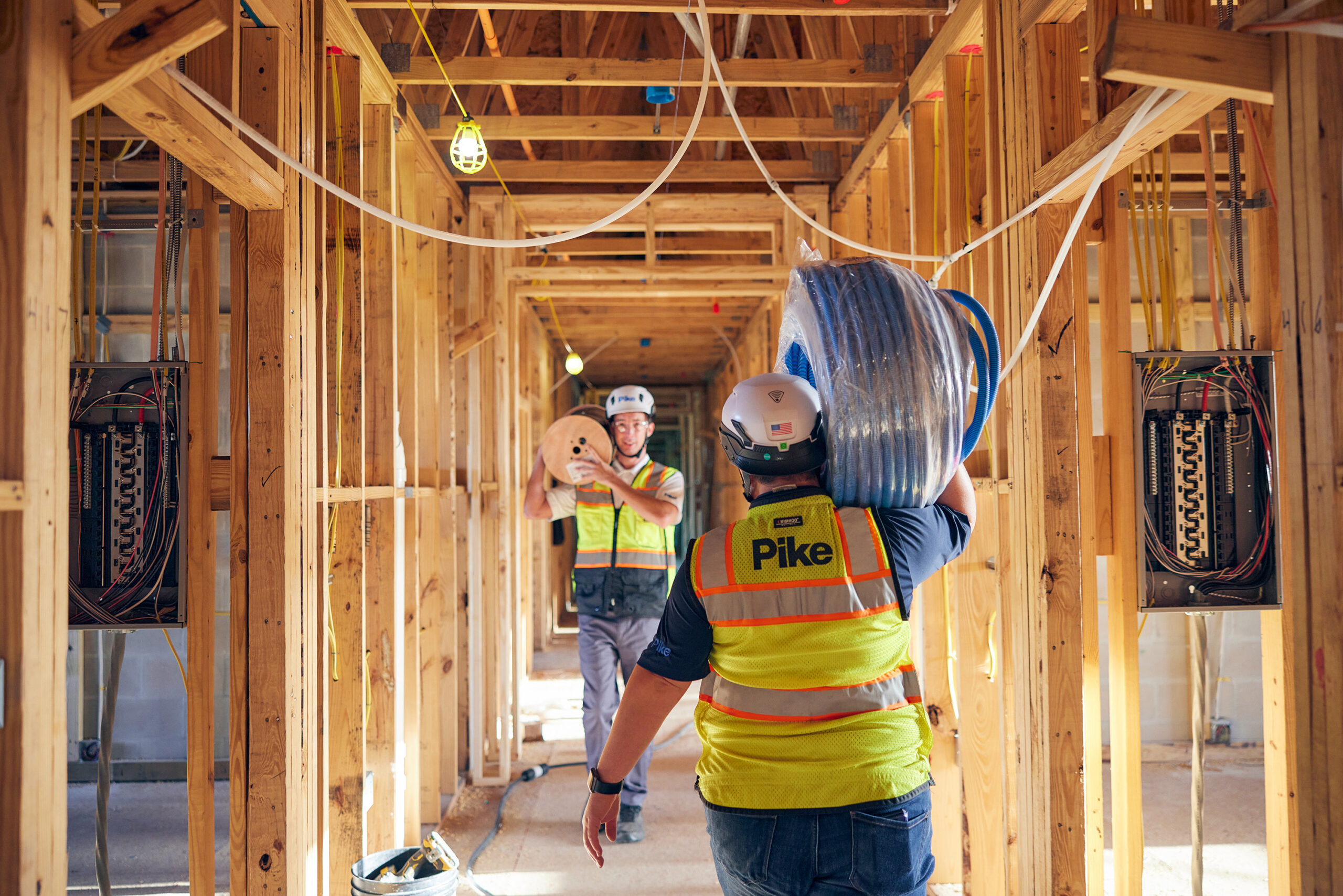
To reduce labor risk and protect schedule performance on large, complex projects, Pike deploys a proactive Labor Attraction and Retention Program (LARP). This program is built to secure and sustain a reliable, skilled workforce through enhanced jobsite amenities — including upgraded restroom facilities, complimentary meals, and workforce incentive initiatives — as well as project-specific per diem and targeted labor premiums to ensure we attract and retain the right talent where and when it’s needed.
Outlook
The construction labor shortage is expected to persist well beyond 2026, influencing costs, schedules, and competitive dynamics across all regions. Firms that proactively adapt—by investing in technology, modernizing workforce strategies, and strengthening talent pipelines—will be best positioned to manage risk and capture opportunities as market conditions evolve.
Material Costs
INPUTS TO CONSTRUCTION
A decrease in material inputs to construction of 0.32% in the fourth quarter, followed three quarters of increases netting an overall increase of 3.0% for the full year.
Specific Materials
Significant Increases
Copper Wire & Cable
Up 8.7%
Structural Steel
Up 6.7%
Rebar
Up 5.5%
Significant Decreases
Resilient Flooring
Down 4.1%
Plastic Pipe
Down 3.4%
Conduit
Down 1.8%
Lumber
The chart below shows lumber prices at the mill. These directly and significantly affect the cost of wood-framed apartments, retirement communities, and many affordable housing projects. Composite (a mixture of dimension lumber products) pricing has increased 3.2% this past quarter, but is down 11.5% over 2025. Panels (a mixture of plywood and OSB) are holding steady, up just 0.4% over the 4th quarter, although down 19.5% for the year.

Labor
Labor costs and labor shortages continue to impact our industry and are a focus of Pike on all our projects. See our feature article in this issue for an outlook of construction labor in 2026.
Contractors are paying higher wages to attract workers. Construction wages continue to climb steadily and increased 4.16% in 2025.

To discuss your project needs and how
Pike can assist, please contact:
ED KUROWSKI
Executive Vice President
Contact: kuroe@pikecs.com / 585.764.3241
REFERENCES
Bureau of Labor Statistics
Fastmarkets